Jambo's GM Journal

Game Session Prep, D&D, Daggerheart and other TTRPGs

  • For several weeks, life in Okros had been good.

    The five strangers who had arrived in the settlement had become part of the community. They foraged for food, ran errands and helped wherever they could. They had earned the trust of the people around them. They were becoming a crew.

    And then the Delvers went missing.

    Screams on the Wind

    The first sign that something was wrong wasn’t something the party could see. It was something they could hear. Screams carried on the wind. Alongside them came a strange, rhythmic chanting. The people of Okros were terrified.

    The Elder summoned the party to his office and gave them a simple task: find the missing Delvers and bring them home. The settlement’s remaining guards couldn’t go. They had a more important responsibility. They had to protect the Sacred Pyre.

    For the first time, the party realised just how much the community was depending on them. They were Okros’s only hope.

    An Unwanted Volunteer

    As the party prepared to leave, they noticed a group of older teenagers watching them. One of them, Ariella, approached. She wanted to help. Ariella believed in Levens sermons and wanted to prove herself by joining the party on their mission.

    The party, however, weren’t convinced that bringing an inexperienced teenager into a dangerous situation was a good idea. They told her to stay behind. She returned quietly to the others, rejected but seemingly accepting their decision (they rolled with Fear…)

    For now.

    The party headed out into the swampy marsh forest, following the direction of the screams.

    The Ruins

    The journey through the marsh was relatively uneventful. The party worked together to make their way through the difficult terrain, and after some time they broke through the trees. Ahead of them was a swampy lake. And beside it stood the entrance to some ancient ruins.

    They weren’t alone. Three people were watching the entrance. Nienna decided to investigate. Being a Moth Faerie has its advantages, after all. She attempted to sneak through the doorway, but her approach didn’t go unnoticed. She was caught and plucked out of the air.

    Things could have escalated quickly. Instead, Leven and Lucrezia stepped in and managed to calm the situation down. The strangers introduced themselves as members of the Clasp (a faction I may have stolen from a well known DND world ;), a gang from Blackjaw Harbour.

    The name meant something to Leven. Blackjaw Harbour was his home.

    The Clasp offered the party a deal. They could enter the ruins first. The gang would follow afterwards. It wasn’t exactly an agreement built on trust, but it was enough to stop things turning violent. At least for the moment.

    Something in the Water

    As the two groups negotiated,I spent a FEAR, something moved beneath the surface of the lake. The water rippled. Then the creatures emerged. Oozing, tentacled slug-like creatures attacked from the water. And there were a lot of them.

    Four smaller creatures swarmed the groups while something much larger joined the attack. The battle was brutal. The Clasp took the brunt of the attack, but Leven was badly hurt in the fighting.

    Eventually the smaller creatures were defeated. Then the larger creature fell. The party had survived.

    But the Clasp hadn’t exactly walked away unscathed. One of the female ruffians lay face down in the swampy water. The party could have left them.

    Instead, Drakana made their position clear. They would help. But the ruins were off limits. The Clasp wasn’t getting inside. The gang eventually slunk away, leaving the party with the ruins. And whatever was waiting inside.

    The Pyre

    The party descended into the ruins. At the bottom of the stairs they found a room dominated by a pyre. It wasn’t a Sacred Pyre. But it looked remarkably similar. Melvin and Lucrezia examined the room and began to piece together what they were looking at.

    This wasn’t a place of worship. The pyre had been deliberately constructed as a protective measure. Paladins of old had established it here, most likely while hunting demons. Whatever this place had been, someone had wanted to keep something contained.

    The party continued exploring. Eventually they found a note. It provided the first real clue about the history of the ruins. The Goldwyn Justicars had been here long ago. They had sealed something within the ruins. Something called Malix.

    And their message to anyone who came after them was remarkably straightforward:

    Leave.

    The warning was enough to make the party curious rather than cautious. They continued.

    Six Skeletons

    The next room offered something more tangible.

    Gold.

    Potions.

    Perhaps the ruins weren’t entirely hostile after all. The party pressed deeper into the complex, choosing doors somewhat at random as they went. That approach eventually caught up with them. Six skeletons emerged. One was considerably larger than the others. Melvin took the brunt of the attack. His armour held, but only just. Eventually the undead fell silent. The party had survived another fight.

    But the room contained something stranger than the skeletons. One of the statues depicted a creature that looked like a goat-like person. The party decided it must be Malix (this was complete improvisation!, they told me it was Goat Like – I decided it was Malix)

    If the Justicars had sealed a demon somewhere within these ruins, perhaps this was the creature they had been trying to contain. And if their interpretation was correct, there was still something else waiting deeper inside.

    A Guardian.

    Then Malix himself. And somewhere in these ruins were the missing Delvers. Their screams and chanting could still be heard. The party continued deeper.

    From the Table: Leven’s Thoughts

    One of the things I’m trying with this campaign is giving the players the opportunity to record their own thoughts about what happened.

    The session journal isn’t just my account of the adventure. Players can add their own in-character reflections, giving us a glimpse into what was going on behind the decisions they made at the table.

    This was Leven’s perspective on the session

    As grim as it may seem, Leven had been looking for an opportunity to use his powers to help heal the world, so he was excited to be called up to help Okros once again. That excitement was quickly dampened when he had to stop Aiella from joining them. He could see she was not happy with his words, but there was no time to dither.

    Although he failed to do much of use during the battle against the swamp creatures, he was heartened that his god stopped Nienna from being grabbed by the largest creature, and that they managed to avoid shedding blood of the ruffians (although he was concerned to meet strangers from Blackjaw Harbour so close to Okros).

    If he wasn’t already convinced the Huntmaster and his Delvers were dead, the note took him the rest of the way. He is shaken, but if he can help defeat this Malix where the Goldwyn Justicars have failed, maybe he can truly start making this world ready for the gods return.

    Looking Back

    This session felt like the point where the campaign properly started to open up.

    The first session was deliberately small. It introduced the characters to Okros and gave them a reason to care about the community.

    This time, they had something to lose.

    The missing Delvers weren’t just an abstract quest. These were people from the community the characters had spent weeks becoming part of.

    I also liked the introduction of the Clasp.

    They immediately gave us a little more information about the wider world. Blackjaw Harbour suddenly became a real place rather than simply something that exists somewhere beyond the edge of the map, particularly for Leven.

    And, of course, we now had Malix. Malix will grow to be really important in this game, and I hadn’t planned that at this point!

    At this point the players knew very little.

    They knew that the Goldwyn Justicars had been here.

    They knew they’d sealed a demon.

    They knew the Justicars had left a warning.

    And they knew something was still alive—or at least active—somewhere deeper in the ruins.

    Most importantly, they still had no idea what had happened to the Delvers.

    The chanting continued.

    And the party had no choice but to keep going.


    Next time in Age of Umbra

    The ruins have more secrets to reveal.

    The Guardian awaits.

    Malix is somewhere below.

    And the missing Delvers may be much closer than the party realises.
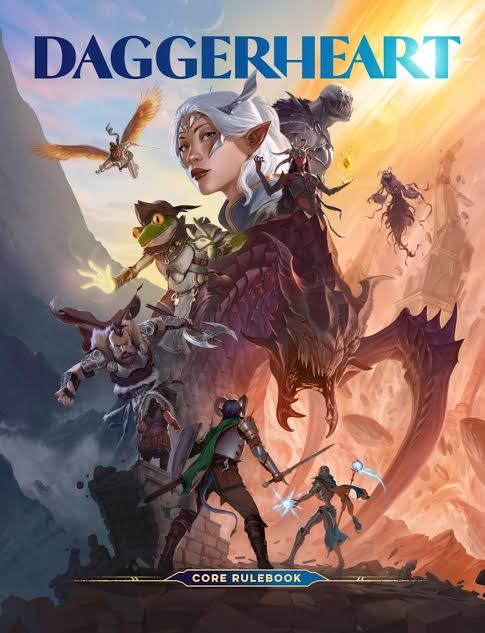
  • Our first session of Daggerheart’s Age of Umbra campaign. (Side note, in real life I’m months ahead of this – but it will take time to catch up!)

    Every campaign has to start somewhere.

    For the characters of Age of Umbra, that somewhere was Okros.

    For me, this was also the beginning of something new. I’d played a little Daggerheart before, but this was my first time running a campaign using the system. Some of the players were completely new to Daggerheart, and a couple were relatively new to tabletop RPGs altogether.

    So before we threw everyone into the deep end, we had some character building to do! I’m doing this by the book (ish) and followed the session 0 guidelines in the Daggerheart book pretty closely!

    Session 0: Who Are We?

    Our party consisted of:

    • Melvin – Human Warrior, played by Martin
    • Drakana – Orc Ranger and her wolf companion, played by Cazza
    • Leven – Giant Seraph, played by Adam
    • Nienna – Moth Faerie Rogue, played by Chelsea
    • Lucrezia – Elf Sorcerer, played by Kieran

    We started with character creation and, importantly, spent some time talking about who these people actually were. Rather than simply filling in character sheets, we talked about everyone’s characters, their backgrounds and what had brought them to this point.

    We also tried some of Daggerheart’s connection questions. I really like the idea behind these questions. They’re a great way of creating relationships between characters without requiring the players to arrive with elaborate backstories already written.

    In practice, though, I think I threw a few of the players in at the deep end. Some were still getting their heads around Daggerheart itself, while others were still learning the conventions of tabletop RPGs. Asking them to immediately invent meaningful relationships between characters they’d only just created was perhaps a little ambitious.

    It wasn’t a disaster—the questions were fun—but it was something I learnt from.

    Sometimes players need a little more context before they’re ready to create the context themselves.

    Welcome to the Age of Umbra

    To help with that, I spent some time introducing the Age of Umbra campaign frame.

    The world is a dangerous place. The old gods are gone, the Umbra has changed the land, and the people who remain have learned to survive in a world where hope is something precious.

    I wanted the players to understand that before we started. Not every detail of the setting needed to be explained. They just needed to know what sort of world they were stepping into.

    And then I wanted to get them playing.

    A Very Small Adventure

    Rather than spending the entire first evening talking about the campaign, I decided to run a very short adventure. The characters had all arrived in Okros, although they’d travelled there from different places and for very different reasons.

    Okros would be their starting point.

    They were gathered together by Elder Akadana, who had a simple request.

    A local forager named Garnar, a Galapa, had failed to return.

    Would they go out into the surrounding marshes and find him?

    It wasn’t supposed to be an epic quest. It was an opportunity to introduce the characters to the setting, let everyone roll some dice and, perhaps most importantly, give the players a chance to learn how Daggerheart actually works by playing it.

    Into the Swamp

    The party headed out from Okros and into the marshes.

    They eventually found Garnar, but they weren’t alone.

    The swamp was home to a number of small, fiery toads, and the party soon found themselves fighting their way through them.

    Then something considerably worse appeared.

    A large, malformed toad emerged from the marsh.

    It was a grotesque creature, covered in tentacles and considerably more dangerous than the little creatures they’d already been fighting.

    For a first taste of Daggerheart combat, it did the job. The party had to work together, and eventually Nienna delivered the final blow. The threat was dealt with. Unfortunately, Garnar wasn’t in particularly good shape. Fortunately, Leven was there to help. After healing the injured Galapa, the newly formed group made their way back towards Okros.

    A Place to Call Home

    And this is where I wanted the session to end.

    Okros isn’t a huge settlement. It has stood for around fifty years, a small community surviving in the shadow of the wider dangers of the Age of Umbra. At its centre burns the Sacred Pyre. The flames burn high above the settlement, visible for miles across the Idol Hollow plains.

    I asked the players what they thought there place in Okros was? They decoded they were foragers and hunters, helping feed the town. So I narrated:

    Weeks passed. The five strangers became a crew. They began regularly venturing beyond the gates to forage and bring back what the settlement needed. They became familiar faces. People knew them. They had responsibilities. More importantly, they had begun to feel like they belonged. For the first time, perhaps, they had somewhere they could call home. And for a little while, there was hope.

    Looking Back

    I think this was a good way to begin the campaign.

    The adventure itself was deliberately small. There wasn’t a huge mystery to solve or a world-threatening villain waiting around the corner. The purpose was to get everyone comfortable.

    We created characters, established some connections, learned about the setting and then actually played the game.

    Looking back, I’d probably spend a little more time helping newer players with the connection questions. Daggerheart gives you some really interesting tools for building relationships between characters, but I think they work best when players have a little understanding of the characters and the world first.

    The short adventure worked well, though. It gave everyone a chance to learn the system without making the first session feel like a rules tutorial. And, perhaps most importantly, it established something that would become increasingly important as the campaign continued:

    Okros was home.


    Next time in Age of Umbra

    The party have settled into life in Okros. They’ve become regular members of the community and have begun venturing outside the settlement to forage.

    But something is changing.

    A group of Delvers have disappeared.

    And when the community turns to the newly formed crew for help, their simple life in Okros is about to become considerably more complicated.

  • Welcome back to Jambo GM’s Journal.

    Over the past couple of years I’ve fallen completely down the tabletop RPG rabbit hole. What started as a lockdown game of Dragon of Icespire Peak with my family quickly turned into running campaigns online for groups of strangers who became friends. Somewhere along the way I discovered that I love being behind the GM screen.

    Earlier this year I decided it was time to try something different.

    After spending years running games online, I wanted to get out of the house more, meet people who shared my hobby, and experience roleplaying around a real table. While searching for local groups, I discovered a Discord community dedicated to tabletop RPGs across the Forth Valley in Scotland, along with the brilliant D&D Scotland Facebook community. Suddenly I realised there was a thriving gaming scene right on my doorstep.

    That journey led me to The Arena in Brightons, Falkirk, where I’ve been lucky enough to run games in their dedicated RPG room the Ivory Ferret. Having a television built into the table for digital maps has been fantastic, but more importantly it’s introduced me to a great group of players and reminded me why I enjoy this hobby so much.

    My first in-person campaign was Tales of the Valiant. We played for around eighteen sessions before the usual challenges of adult life—particularly scheduling—caught up with us. Looking back, I’d also made the story more complicated than it needed to be. It was a valuable lesson in campaign design, and one I’ll blog about in the future.

    Not long afterwards, I played a Daggerheart one-shot.

    I enjoyed it so much that I ran one myself.

    That one-shot became the spark for my current Age of Umbra campaign. Three players from my Tales of the Valiant group joined me for the new adventure, and for the last six months we’ve been exploring forgotten ruins, uncovering ancient mysteries, and discovering together what makes Daggerheart such an enjoyable system to run.

    Along the way I’ve also branched out into other games, most recently running a Shadowdark one-shot, and I’ve found myself enjoying the variety that comes with trying different systems and ideas.

    More Than Just Books

    One thing that surprised me after moving to in-person play was just how much I enjoyed experimenting with the tools that support the game.

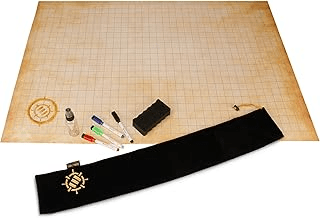
    Some sessions use maps I’ve built in Inkarnate. Others use maps from many of the Patreon creators I’ve backed or the Tom Cartos map books on my shelf. I also received a reusable map for Christmas from my partner, this has made those random event really easy to map out.

    Depending on the encounter, I might pull out my Pathfinder Second Edition Monster Box pawns, NPC pawn collections, Kobold Press Tales of the Valiant pawns, or simply a handful of wooden meeples.

    Not every product earns a permanent place at my table.

    The ones that do are worth talking about.

    So… Why Relaunch?

    When I looked back at Jambo GM’s Journal, I realised it didn’t quite reflect what I wanted to write about.

    Rather than trying to cover everything, I wanted the site to have a clearer focus.

    Going forward you’ll find four main themes:

    • Campaign Journals – reflections and lessons learned from running Daggerheart’s Age of Umbra and future campaigns.
    • Honest Reviews – RPG books, adventures, third-party supplements and physical GM tools that I’ve actually used in play.
    • Worldbuilding – locations, factions, NPCs, encounters and the creative process behind building believable worlds.
    • Behind the GM Screen – session prep, mistakes I’ve made, and ideas that have genuinely improved my games.

    Everything I write will come from real experience.

    If I review a book, it’s because I’ve read it and used it.

    If I write about running Daggerheart, it’ll be because my players have surprised me yet again and I’ve learned something from it.

    Looking Ahead

    Over the next few months I’ll be sharing my experiences running Age of Umbra, reviewing products that have genuinely helped my games, sharing some of the maps I’ve created in Inkarnate, and talking about the successes—and inevitable mistakes—that come with running games.

    I’m also looking forward to exploring more systems in the future. Daggerheart is my current focus, but one of the joys of this hobby is discovering new games, I’ve got Draw Steel, Nimble 2e, DND 5.5, Dragonbane, The One Ring 2e, Pathfinder 2e and Shadowdark in my sights!

    Whether you’re a new Game Master looking for inspiration, a veteran GM searching for your next great resource, or simply someone who enjoys reading about tabletop RPGs, I hope you’ll find something here that’s useful.

    Thanks for joining me for the next chapter of Jambo GM’s Journal I hope your next rolls a crit!