For the last four years, my GM screen has been a couple of monitors. My dice have clattered in virtual tabletops – I’ve tried Roll 20, Above VTT, Shard VTT, Foundry and I messed about a bit with Fantasy Grounds. But earlier this summer, for the first time since I started running games, I heard the real sound of dice hitting a table. I saw players lean in over a battle map and I felt the energy of a room full of people sharing a story together.
And honestly? It’s been both super exciting and extremely terrifying!
Why I made the Switch
Like a lot of people, my tabletop RPG journey began in lockdown. My kids and wife had nowhere to run, so I made them play D&D with me, I’d never played before. The closest I’d come was playing the shit out of Baldurs Gate 1 and Baldurs Gate 2. The wife and kids weren’t massive fans although we did finish Dragon of Icespire Peak but with the world opening up again – they made it clear that this was my hobby, not theirs! So, I looked online, and I realised that the easiest way to play D&D was to run it. How difficult could it be? I jumped down the rabbit hole big time. Patreon subscriptions, online toolsets, Kickstarters – you name it, I’ve done it! Over the last few years I’ve run loads of D&D both 2014 and 2024 and a little bit of Pathfinder 2e – all online. But something was missing for me…So when a gaming venue opened up near me, I decided to take the plunge (it took 12 months!) But I’m there now.
This year I’m running a Tales of the Valiant campaign in person and learning loads on the journey.
Tales of the Valiant
When I decided to go in‑person, I also wanted to go a little more analogue. Nothing against D&D Beyond — I own the Legendary Bundle and it’s been a fantastic tool — but I wanted this campaign to feel different. I wanted the weight of real books in my hands, the rustle of character sheets at the table, and the click clacking of dice at the table.
So I chose Tales of the Valiant (by Kobold Press). On the surface, it’s very familiar to anyone who’s played D&D — the same heroic fantasy — but with some clever tweaks, it’s based on the 2014 edition. The two “house rules” that grabbed me immediately were Luck Points and Doom Points. They at least reward the players for those misses and the Doom Points give me as a GM, a few extra levers to pull when the combat needs a twist or a crank! I was heavily influenced by reading Sly Flourishes comments on both features.
I also picked up the Old Margreve book (well why not?!) who doesn’t want a setting with folklore and mystery. The Margreve Forest isn’t just a backdrop — it’s alive, it’s ancient, and unpredictable. It remembers trespasses. It rewards respect. It’s the kind of place where every step into the undergrowth could bring you face to face with a friend, a foe, or something far stranger.
That’s the tone I pitched to my players: familiar enough to feel comfortable, but with enough new edges to keep everyone curious. A world where the rules are just a little different, and the forest is always listening. I’ve stolen bits and pieces of the Margreve and chucked into my own homebrew world – An Talamh (the land in gaelic). I quite enjoy making maps in Inkarnate, and couldn’t resist a world map for this game

The artwork in all 3 books that I own – really spoke to me. I found the style a little more to my taste than the 2024 stuff from WoTC.


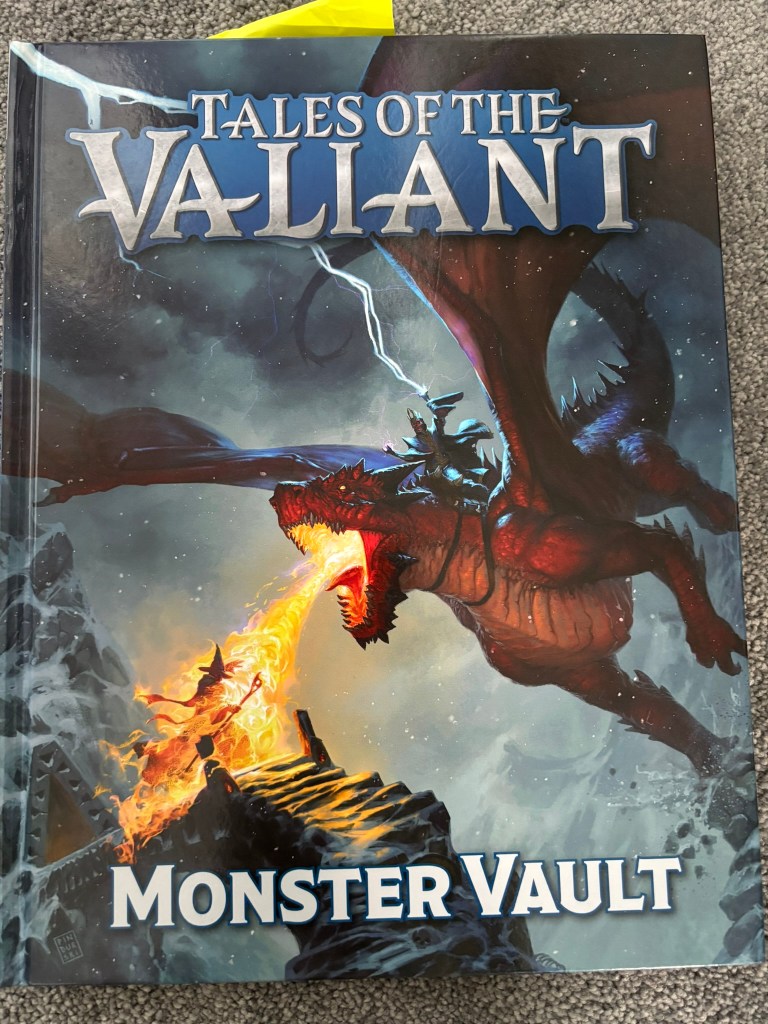

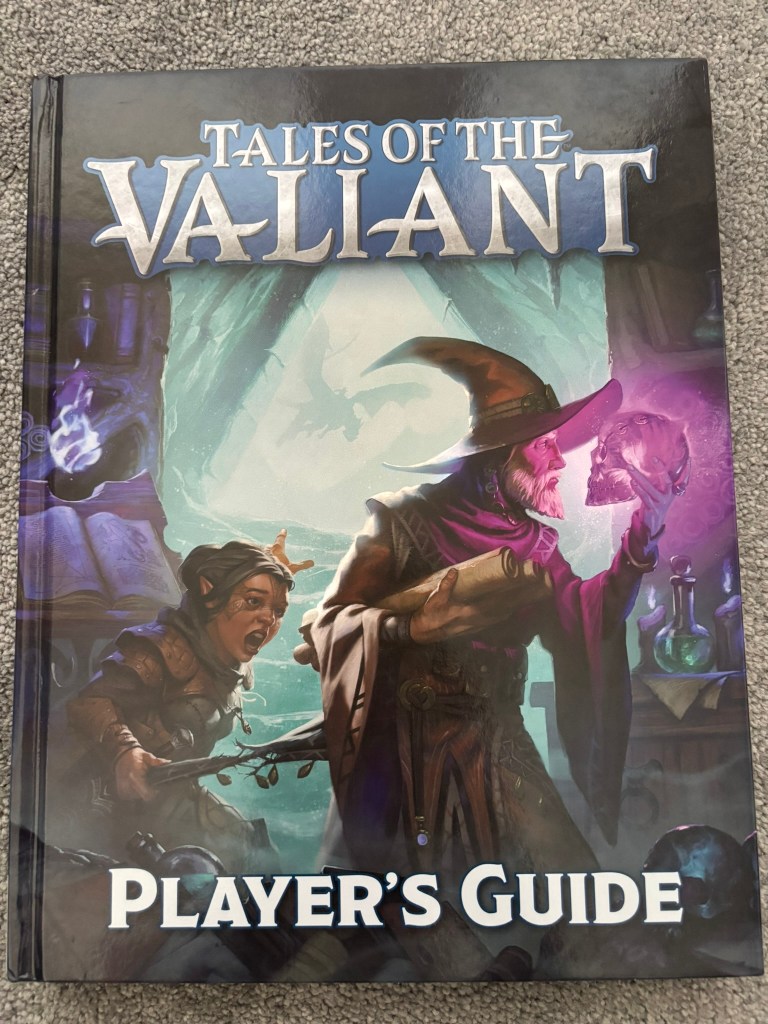

Two Sessions In – Finding Our Rythm
We’re now two full sessions into Tales of the Valiant, and so far it’s going really well. I’ve got a table of six players, but we’ve agreed we’ll run as long as at least three can make it. That flexibility, plus the size of the group, means we’re far more likely to keep a regular schedule. We’ve levelled up twice – having complete Hollow Man and Wrath of the Bramble King from the Old Margreve book, and when the party comes back together with their level 3 characters, I’m going with a bit of a homebrew advanture.
We’ve settled on meeting fortnightly for 3–4 hours, which feels right — enough time to sink our teeth into the story without burning out. If someone can’t make it, I simply “fade them out” for that session. It’s like a film or TV show: their character is still in the world, just not in the current scene or camera shot. No awkward retcons, no forcing attendance — just keeping the story moving.
What’s Next?
Over the coming weeks, I’ll be sharing:
- Session recaps — the big moments, the twists, and the consequences.
- Session prep notes — how I get ready, what tools I use, and what I’ve learned.
- System thoughts — starting with Daggerheart, which I’m running as a one‑shot this Friday night.
If you’re curious about how these games run in the wild — or you just enjoy a peek behind the GM screen — stick around.
Subscribe to get new posts straight to your inbox, and join me as I explore the shift from online to in‑person play.
And I’d love to hear from you:
- What games are you running right now?
- Is anyone else playing Tales of the Valiant — how are you finding it?
- Have you made the jump from online to in‑person? How did it go for you?
Drop your thoughts in the comments — let’s swap stories.
 Jambo's GM Journal
Leave a comment